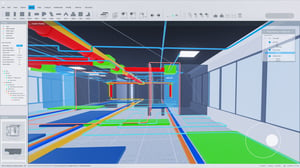
Ever walked into an area ready to install, tools loaded, crew lined up, only to find the sleeve isn't there?
Ever had to move an already-installed scope because the model was "coordinated" but not actually site-ready?
If you've been in the field long enough, you already know the punchline: the modeling might be done, but the work isn't.
This is one of the most common and costly gaps in modern construction. BIM exists. The coordination meeting happened. Sign-offs were given. And yet, when crews show up to build, they're still stopping, guessing, rerouting, and coming back to fix what someone else installed differently.
That gap between model sign-off and real installation is where projects bleed time, money, and morale.
The Problem Isn't "No BIM"...It's BIM That Stops Too Early
Most trade partners today have BIM teams doing exactly what they're asked: coordinating to meet GC schedules, resolving clashes to hit sign-off, then moving on to the next unapproved area.
From a scheduling standpoint, that makes sense.
But here's the reality the field lives with: between coordination sign-off and actual installation, models still change. Other trades adjust routing. Structure gets revised. Gravity systems shift. Supports move. Clearances tighten. Sometimes it's intentional. Sometimes it's unavoidable. But almost always, it happens after the area is considered "done."
The result? Crews install based on outdated assumptions. Work gets paused while foremen figure out what to do. Installations get reworked to match how another trade actually built it. People are forced to make it work.
That's not a technology problem. That's a handoff problem.
Who Pays for That Gap? The Field Does.
When conflicts aren't caught until installation, foremen lose hours replanning in real time. Crews lose momentum and confidence. Supers lose schedule float they didn't even know was at risk. Safety takes a hit as rushed fixes and awkward installs become the norm.
No one planned for the chaos. But the people holding the tools are the ones who absorb it.
This is why so many field leaders feel like BIM "exists," but doesn't actually protect them.
"Coordinated" and "Install-Ready" Are Not the Same Thing
A coordinated model answers one question: Do these systems fit together on paper?
An install-ready model answers a different, more important question: Can my crew build this without stopping to figure things out?
Install-ready thinking acknowledges a hard truth: field work doesn't care when coordination ended. It cares what's actually in the way when the lift goes up.
That's why some contractors are taking an extra step after coordination sign-off: re-checking models during active installation, re-running clashes, and translating remaining conflicts into clear plans and elevations the field can actually use. Not to point fingers. Not to reopen coordination debates. Just to remove surprises before people are standing under them.
Fewer Surprises = Safer, More Predictable Work
When foremen know where conflicts still exist before their crew mobilizes, they can plan install sequences intentionally. Conversations with other trades happen earlier, not mid-install. Adjustments get documented instead of improvised. Crews aren't forced into rushed or unsafe decisions.
That's what "People First" actually looks like in practice. Safety isn't just PPE and rules. It's eliminating the stress, pressure, and uncertainty that lead people to take risks they shouldn't.
Before You Mobilize, Ask These Five Questions
Whether you're a foreman, trade super, or CM super, the warning signs are usually there; they just don't get addressed early enough. Before your crew shows up:
- Is the model detailed enough to actually install from, or does it just "exist"?
- Do we know exactly what we're responsible for and what we're not?
- Have major conflicts already been identified, or are we about to find them mid-install?
- Will the layout land where the model says it will?
- If something still conflicts, do we know who makes the call before the crew is affected?
If any of those answers are unclear, the risk isn't theoretical. It's about to show up in the field.
The Foreman Test
Here's the simplest way to know if an area is truly ready:
If my worst crew showed up tomorrow, could they install cleanly without stopping to figure things out?
If yes, you're install-ready. If not, something still needs to be resolved before the field pays for it.
A Practical Next Step
To help close this gap, we've put together a field-focused Install-Ready Checklist; not a BIM document, not a coordination agenda, but a practical tool foremen and supers can use before mobilization. It covers scope and responsibility clarity, install-level detail, layout confidence, conflict readiness, sequencing, safety, and how to handle changes without eating cost.
Because the best projects aren't just coordinated. They're ready to build.
Download the Install-Ready Checklist
Send this to your PM or VDC lead. Use it to ask for models that are install-ready, not just signed off.